Synex
Rewriting Japan's Genetic Story: The Third Ancestral Group
Ancient Jomon clay figurine (Dogu). Credit: Wikimedia Commons / Public Domain
A groundbreaking wave of DNA research has shattered the long-held dual-origin theory of Japanese ancestry, revealing a far more dynamic tripartite heritage that continues to shape modern Japan.
For decades, the narrative centered on two primary groups: the indigenous Jomon hunter-gatherers, known for their distinctive cord-marked pottery and deep roots dating back over 14,000 years, and the Yayoi migrants who introduced wet-rice agriculture from the continent around 300 BCE to 300 CE. Yet recent large-scale genomic studies confirm a third major ancestral component that arrived during the Kofun period (roughly 300-700 CE), fundamentally enriching the genetic tapestry of the archipelago.
This discovery, powered by whole-genome sequencing of thousands of contemporary Japanese individuals, highlights how migration, adaptation, and cultural fusion created one of the world's most unique populations.
The Tripartite Model Explained
Modern Japanese genomes are best explained through three distinct ancestral streams:
Jomon Ancestry: Representing the ancient foragers of the Japanese archipelago, this component is highest in Okinawa (around 28.5%) and decreases northward and westward. It contributes distinctive traits and is more prominent in southern and northeastern regions.
Northeast Asian Ancestry: Linked to Yayoi-period migrants who brought rice farming, metallurgy, and new settlement patterns. This component shows stronger presence in northeastern Japan and likely connects to ancient populations from the Korean peninsula or broader Northeast Asia.
East Asian Ancestry (The Third Group): The dominant component in many mainland populations (often exceeding 60% on average), this influx arrived prominently during the Kofun era. It shows close genetic affinities with ancient Han Chinese-related groups and coincided with state formation, imperial systems, and continental cultural exchanges. This "third" group was previously underappreciated in simpler dual models.

Yayoi period dotaku bronze bell. Credit: Wikimedia Commons / Public Domain
Regional gradients are striking: Western Japan leans heavily toward East Asian influences, while the Northeast retains stronger Northeast Asian signals, and Okinawa preserves elevated Jomon heritage. This north-south and east-west variation creates a living map of Japan's layered history.
Why This Matters Today
Beyond historical insight, these ancestral components influence modern health. Studies have linked specific archaic DNA segments, including Neanderthal and Denisovan traces, to variations in disease susceptibility such as diabetes, heart conditions, and certain cancers within Japanese populations. Understanding this tripartite structure opens doors to more precise medicine tailored to Japan's genetic diversity.
The findings underscore Japan's identity as a vibrant fusion point rather than an isolated culture, with migrations continuing to echo in everything from regional dialects to festival traditions.
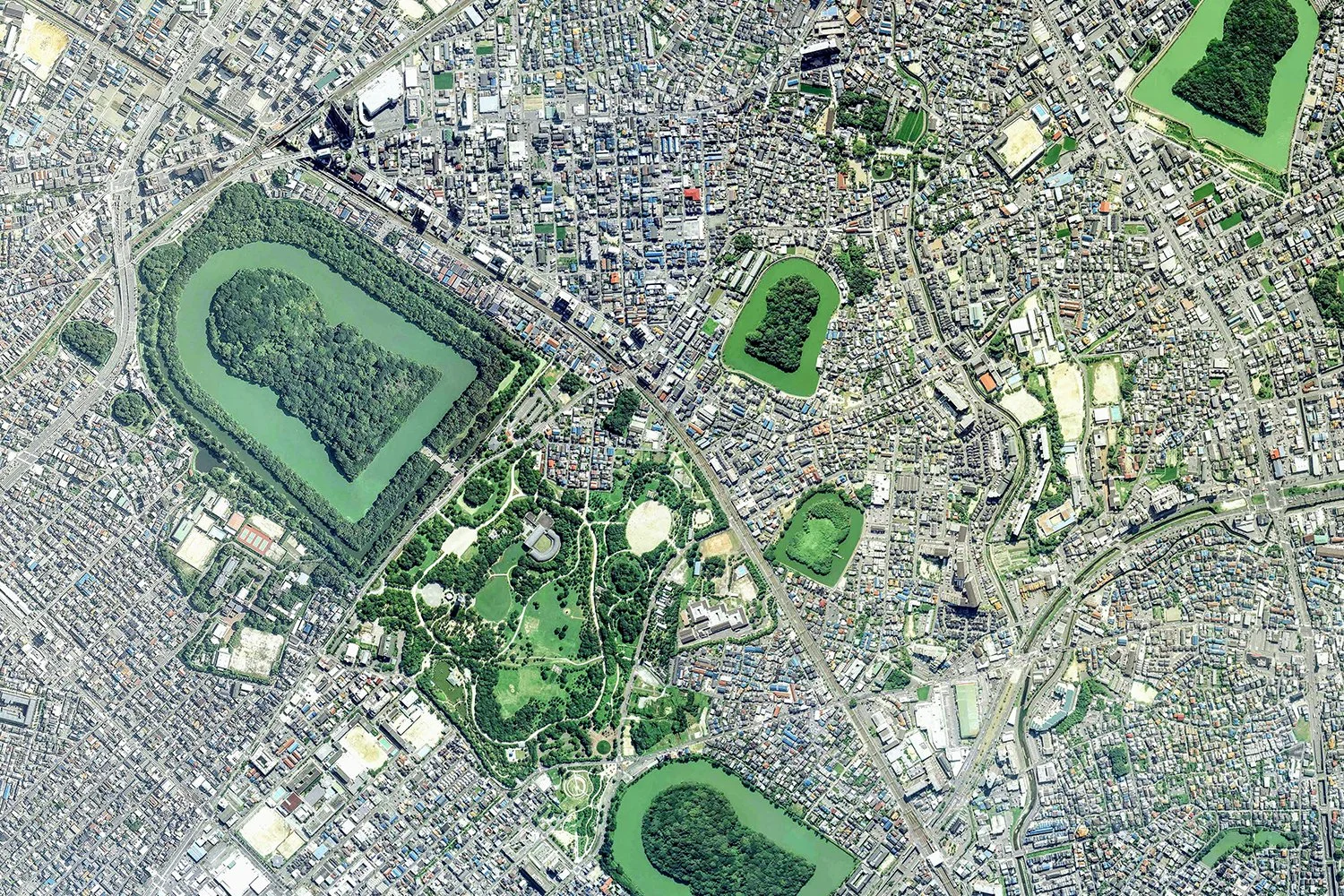
Aerial view of Daisen Kofun, a massive keyhole-shaped imperial tomb. Credit: Wikimedia Commons / Public Domain
Watch this engaging overview of Japan's ancient DNA revelations: Ancient Japanese Ancestry Explained
The story of Japanese DNA is a testament to resilience, adaptation, and connection across millennia. What hidden threads from your own heritage might shape who you are?
Users can write and read similar articles at Synex.
#JapaneseDNA #JomonAncestry #TripartiteOrigins #AncientJapan #GeneticHistory
Enjoying this article?
Join Synex to get notified about similar articles, discover new content, and share your own knowledge with the world!