Synex
NVIDIA Unveils DLSS 5: The AI Breakthrough Poised to Redefine Game Graphics
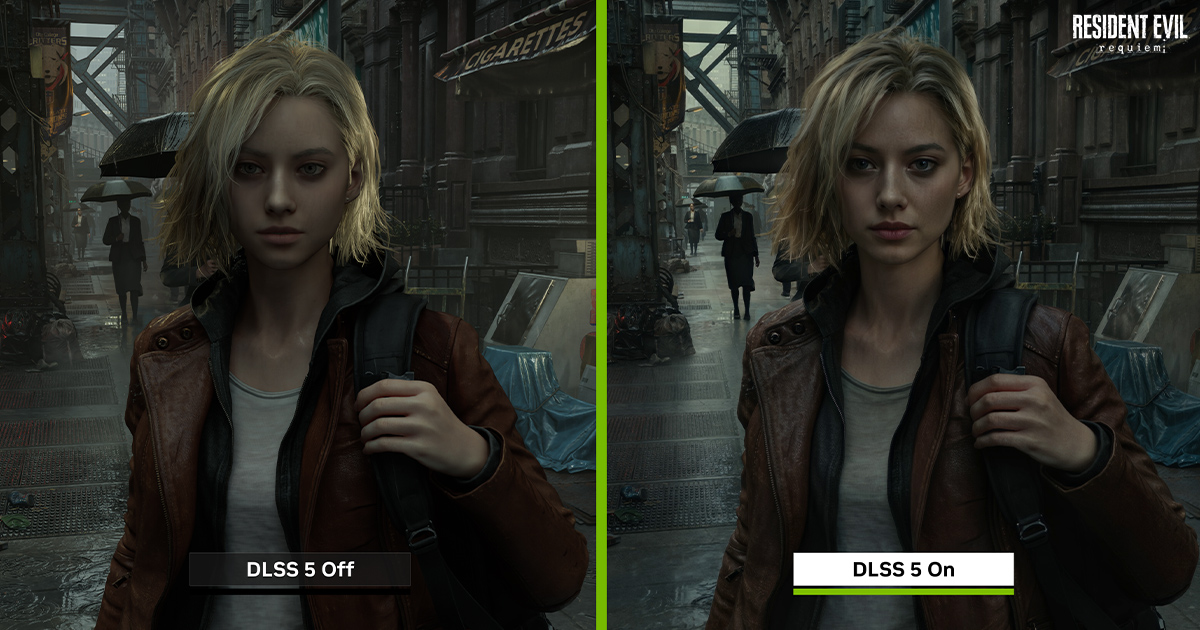
Just when gamers mastered the leap from pixels to photorealism through ray tracing, NVIDIA has dropped its most ambitious move yet. On March 16, 2026, at GTC, the company officially revealed DLSS 5, calling it the "GPT moment for graphics." This next evolution promises to infuse game pixels with photorealistic lighting and materials in real time, bridging the gap between rendered worlds and reality. While not yet available, DLSS 5 is confirmed for a fall 2026 release.
This announcement arrives shortly after the rollout of DLSS 4.5, keeping NVIDIA's neural rendering tech at the forefront of PC gaming innovation.
What Is DLSS and How Did We Get Here?
DLSS, or Deep Learning Super Sampling, debuted in 2018 as an AI-powered upscaling technology designed to boost frame rates while preserving or enhancing image quality. Over generations, it expanded from basic super resolution to include ray reconstruction and multi-frame generation.
By DLSS 4, transformer-based models and multi-frame generation became standard. DLSS 4.5, announced at CES 2026 and with Dynamic Multi Frame Generation launching March 31, 2026, further refined quality using a second-generation transformer model and up to 6x frame generation on RTX 50-series GPUs.
 Credit: NVIDIA official materials via GeForce News. When sharing on social platforms, please credit the original photographer or source.
DLSS 5: Neural Rendering for Photorealistic Fidelity
Unlike prior versions focused primarily on performance through upscaling and frame generation, DLSS 5 introduces advanced real-time neural rendering. It uses AI to transform pixels with photorealistic lighting, materials, skin details, hair, and environmental effects, going beyond traditional rendering pipelines.
NVIDIA describes it as a major breakthrough since real-time ray tracing launched in 2018. Early previews at GTC demonstrated the technology in titles and tech demos, showing dramatic improvements in visual realism using existing RTX hardware, particularly RTX 50-series.
Developers retain full artistic control, ensuring the enhancements align with each game's intended vision. Confirmed upcoming support includes games such as Assassin's Creed Shadows, Hogwarts Legacy, Starfield, Resident Evil Requiem, and others like EA SPORTS FC.
 Credit: NVIDIA GeForce / GTC 2026 preview. When sharing on social platforms, please credit the original photographer or source.
The technology builds on NVIDIA's AI supercomputers for training, enabling real-time inference that makes games appear closer to cinematic quality without requiring massive hardware jumps.
Release Date and What We Know So Far
NVIDIA has confirmed DLSS 5 will arrive in fall 2026. No exact date has been announced, and full hardware compatibility details remain limited, though it is expected to leverage the latest RTX architectures for optimal performance.
Early hands-on reports from outlets like Digital Foundry and Tom's Guide highlight its potential to deliver photo-realistic results in existing and upcoming titles. However, as with any new AI rendering tech, final image quality and developer adoption will determine its real-world impact.
A tech demo called Zorah showcased the capabilities alongside comparisons in several games.
 Credit: NVIDIA official tech demo imagery. When sharing on social platforms, please credit the original photographer or source.
Note to readers: When sharing these or any DLSS-related images on social platforms, always credit the original photographers, NVIDIA, or news outlets to respect their work and maintain journalistic integrity.
This next chapter in DLSS continues NVIDIA's rapid pace of AI-driven graphics innovation, offering gamers higher fidelity without proportional performance trade-offs.
Users can write and read similar in-depth articles at Synex.
#DLSS5 #NVIDIADLSS #DLSSRelease #NeuralRendering #RTXGraphics
Sources
- NVIDIA official announcement and GeForce News (nvidia.com/en-us/geforce/news, March 16, 2026)
- Tom's Guide, Digital Foundry, and Tom's Hardware coverage of GTC 2026 previews
- The Verge, PCWorld, and VideoCardz reports on DLSS 5 reveal and fall 2026 timeline
All information is based on publicly confirmed NVIDIA statements and reputable tech reporting as of March 17, 2026.
Get the next story before it trends
Join Cizeex free to react, comment, and catch new stories first, or get the Cizeex app.
Join Cizeex free